


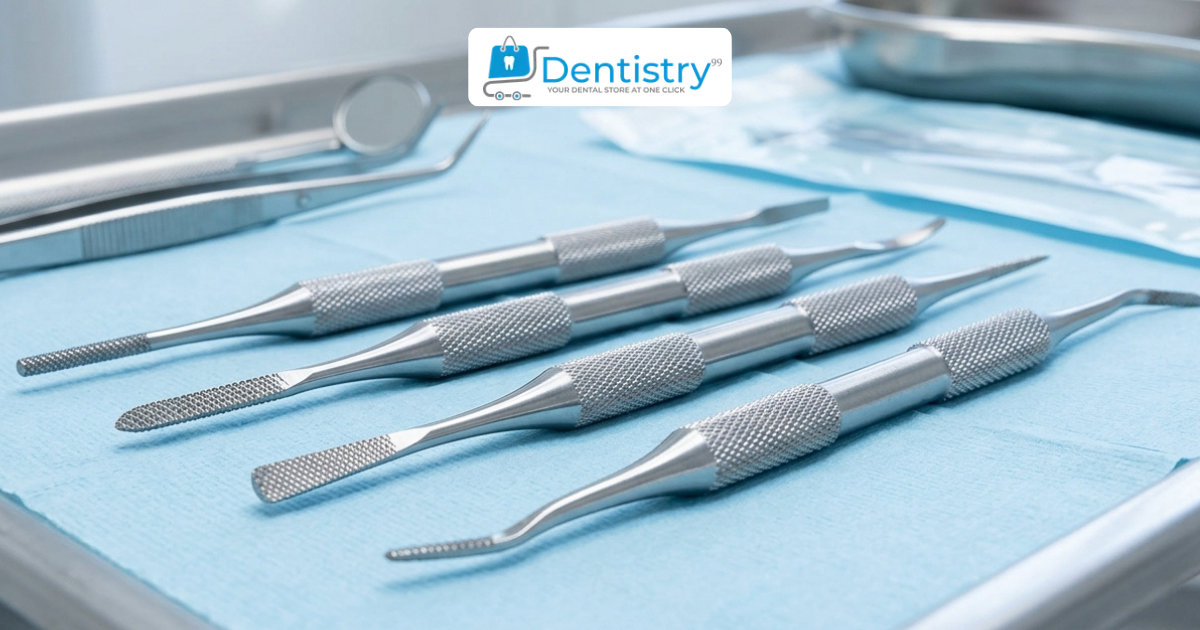
A dental bone file is a hand instrument used to smooth and shape bone during oral surgery, usually after the heavy cutting is already done with a bur or rongeur. It gives the surgeon a level of control that power instruments just can't match. You'll find these along with other dental instruments at Dentistry99.
What Are Dental Bone Files Used For?
Once the bulk of the bone work is finished, there's often a rough edge or an uneven ridge left behind, and that's where a bone file comes in. Rather than cutting away large amounts of bone, it works in short, controlled strokes to clean up whatever the bur or rongeur left behind. Think of it as the finishing tool in the process, not the starting one.
A few situations where you'll reach for one:
Smoothing sharp bone edges left after a tooth extraction
Contouring the alveolar ridge before an implant goes in
Refining bone during ridge augmentation or a sinus lift
Knocking down small bony spicules that would otherwise irritate the gum tissue
Shaping bone during periodontal osseous surgery
Because you're removing bone a little at a time instead of in chunks, there's less risk of taking off too much, and you get better feedback through your hand as you work.
Different Types of Dental Bone Files
Not every bone file works the same way or fits the same spot in the mouth. Some are built for speed, others for a finer finish, and the shape of the tip matters just as much as the cutting pattern. Picking the wrong one for the job usually means more time in the chair and a rougher result. If you want help matching a file to a specific case, this guide on:
choosing the best dental bone file for precision surgical procedures.
Single-Cut Bone Files
These have grooves that run in a single direction, so they take bone off slowly but leave a smoother surface behind. They're a solid choice for the final pass, especially in delicate spots where you'd rather go slow and stay in control.
Cross-Cut Bone Files
Cross-cut files have grooves running in two directions that cross over each other, which lets them cut faster than a single-cut file. These are handy earlier in the process, when there's still a fair amount of bone to remove before you switch to something finer.
Straight Bone Files
A straight bone file has a flat, linear working end, which works well on flat or easy-to-reach bone, like the top of the ridge or areas toward the front of the mouth.
Curved Bone Files
Curved files are angled so they can reach the back of the mouth or areas where visibility is limited, such as around the molars or inside an extraction socket. A straight file just can't keep contact with the bone in those spots.
Narrow-Tip Bone Files
These are made for tight quarters, like between teeth or inside small ridge defects, where a wider tip would risk bumping into an adjacent tooth or soft tissue.
Wide-Tip Bone Files
Wide-tip files cover more ground with each stroke, so they're efficient on broader, flatter areas where you're not worried about working in a tiny, precise spot.
Benefits of Using Dental Bone Files
Even with all the rotary tools available today, bone files still earn their spot on the tray. Here's why:
Controlled bone removal: You can make small adjustments by hand that a bur simply can't replicate.
No thermal damage: There's no heat generated, so the bone cells around the surgical site aren't put at risk.
Better feel for what's happening: You can sense resistance and adjust as you go, which is harder to do with a rotary instrument.
Quieter and less jarring: Patients who are anxious about drilling sounds tend to tolerate manual filing better.
They last: A good stainless steel bone file, cared for properly, can hold up through hundreds of sterilization cycles.
How to Use a Dental Bone File (Step-by-Step)
Make sure the site is ready. The heavy lifting, extraction or bulk bone removal, should already be done before you pick up the file.
Choose the right file for the job. Base it on where you're working, how much access you have, and how much smoothing is actually needed.
Hold it with a modified pen grasp. This gives you the control you need for short, deliberate strokes.
Use light, even pressure. Move in one direction, usually pulling toward yourself, instead of sawing back and forth.
Irrigate as you go. This clears away bone debris and keeps you able to see what you're doing.
Feel and check the surface. Run an explorer or periodontal probe over the area before closing to confirm it's smooth.
Switch to a finer file if needed. Many clinicians start with a cross-cut file and finish with a single-cut for the smoothest result.
How to Clean and Care for a Dental Bone File
Rinse it right after use, before blood or bone debris has a chance to dry onto the surface.
Run it through an ultrasonic bath or use an enzymatic cleaner to get into the grooves before sterilizing.
Take a close look under magnification for dull spots, corrosion, or a bent tip.
Dry it fully. Leftover moisture can cause staining or rust, especially on carbon steel instruments.
Package and sterilize following whatever autoclave cycle the manufacturer recommends.
Store it in a proper tray or cassette so the working tip isn't knocking around against other instruments.
Precautions When Using a Dental Bone File
Use the Instrument for Its Intended Purpose
A bone file is built for fine contouring, not heavy bone removal. Trying to use it like a rongeur or bur just wears it out faster and slows you down.
Follow Manufacturer Instructions
Cleaning and sterilization needs can vary depending on the file's material and design. Sticking to what the manufacturer recommends keeps the cutting edge sharp for longer.
Check the Instrument Before Use
Take a second before every procedure to check for a bent tip, dull grooves, or any corrosion. A file that's not in good shape can slip or apply uneven pressure, which is the last thing you want mid-surgery.
Follow Appropriate Infection-Control Procedures
Bone files come into direct contact with blood and bone, so cutting corners on cleaning, packaging, or sterilization isn't worth the risk of cross-contamination.
Shop Dental Bone Files at Dentistry99
Dentistry99 stocks a solid lineup of surgical and periodontal instruments built for precision bone work. If you're after something reliable for general contouring, take a look at the Howard bone file, or check out the Howard 12 bone file if your procedures call for a different tip shape and cutting pattern. Both are stainless steel and hold their edge well through repeated sterilization.
Frequently Asked Questions About Dental Bone Files
Does bone filing hurt more than drilling?
Not really. Filing is slower and produces far less vibration than drilling, and it's done after the area is already numb. A lot of patients actually report less soreness afterward compared to extended drilling, mostly because there's no heat buildup involved.
Is a dental bone file safe to use near soft tissue?
It is, as long as it's used the way it's meant to be. Bone files work directly on bone, and a careful clinician keeps soft tissue retracted out of the way while filing. That's part of why narrow-tip and curved designs exist, they let you stay clear of the gum tissue in cramped spaces.
How often should a dental bone file be replaced?
There's no set schedule for this. It really comes down to how often the file gets used and how well it's been cared for. Once the grooves look worn down or the tip feels dull even after sharpening and sterilizing, it's time for a new one.
What's the difference between single-cut and cross-cut bone files?
Single-cut files have grooves in just one direction, so they cut slower but leave a smoother finish. Cross-cut files have grooves running both ways, which lets them remove bone faster, making them better for early shaping before you switch to a single-cut file to finish the job.
Dentistry99 Store
Need supplies for your practice?
Shop trusted brands with free standard shipping on qualifying orders.


